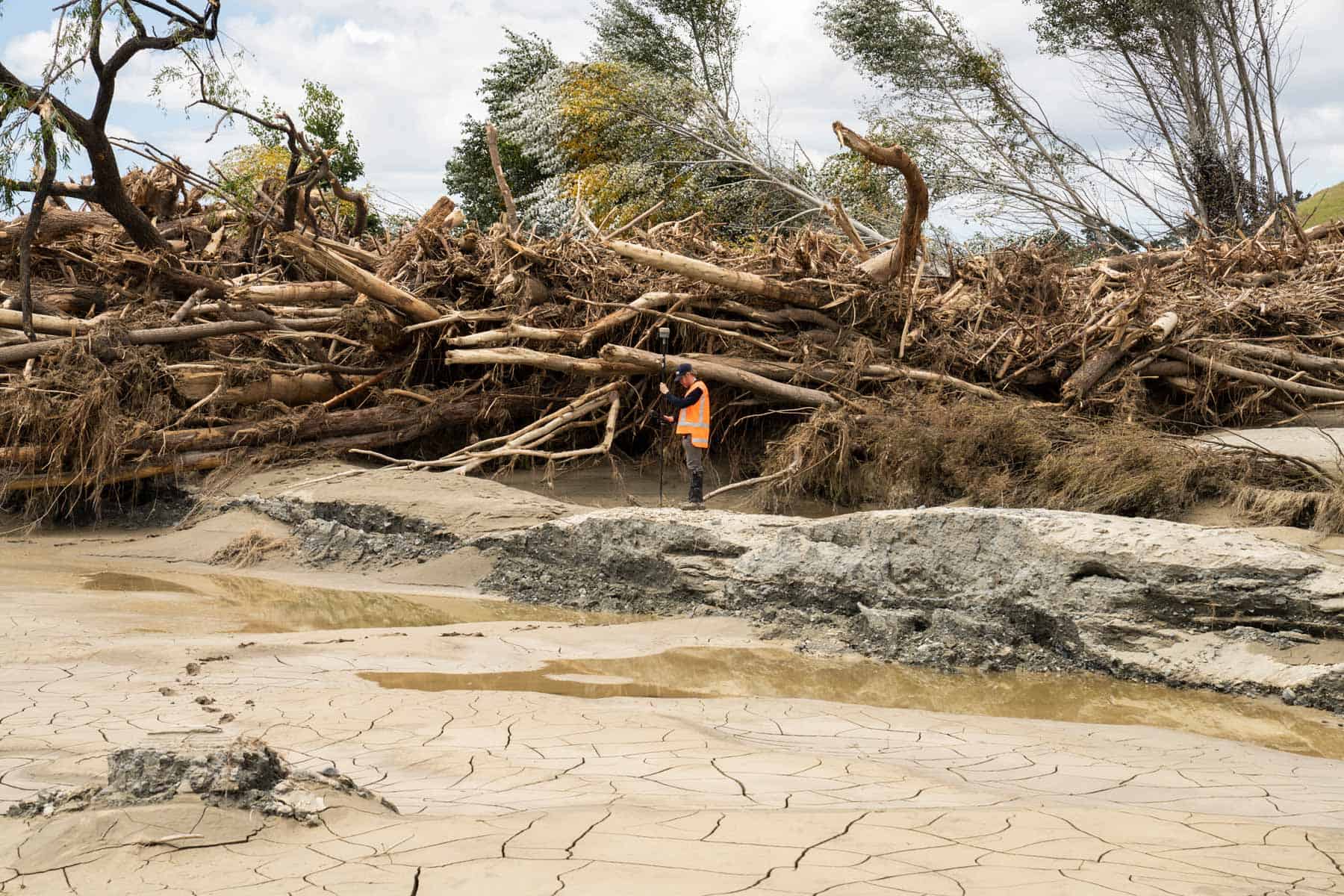
Following a damaging natural hazard event, well-coordinated science activities can support recovery and deliver new insights to build future resilience.
Events such as the 2010-2011 Canterbury Earthquakes, the 2016 Hurunui-Kaikōura earthquake, the 2023 Auckland Anniversary floods and Cyclone Gabrielle have all shown the essential role of science to support community and agency understandings of what has happened and why, and provide new insights that can be applied to future planning.
But they have also demonstrated that science activities need to be well coordinated.
The breadth and depth of the Platform’s capability across hazard science, social science, engineering and emergency management, combined with strong internal and external networks, make it well-placed to coordinate science responses following large natural hazard events.
This new function will ensure that:
- Post-event natural hazard research activities are aligned and well-coordinate.
- Perishable data related to impacts in the built and social/human environments can be collected and analysed.
- Emerging science insights are communicated effectively to relevant response and recovery agencies and communities
- Lessons and insights are captured to drive future resilience.